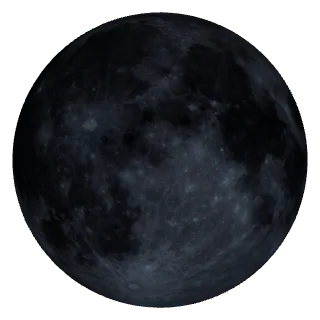
New Moon
A moon hidden in light, holding its place in the night
The moon is positioned between Earth and the sun, so its illuminated side faces away from us. This makes it virtually invisible in the sky.
ObservationCannot be observed with the naked eye. This is also when solar eclipses can occur.
CultureMarks the 1st day of the lunar calendar and symbolizes new beginnings. In East Asian culture, this day was considered the start of a new month.
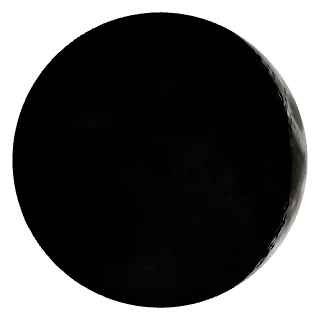
Waxing Crescent
A slender silver arc after sunset
The moon has moved about 45 degrees east of the sun, creating a thin crescent shape. Sunlight illuminates only the right edge, forming an eyebrow-like sliver.
ObservationVisible for 1-2 hours in the low western sky just after sunset.
CultureAppears around the 2nd-3rd day of the lunar month. Traditionally, people made wishes upon seeing the crescent moon.
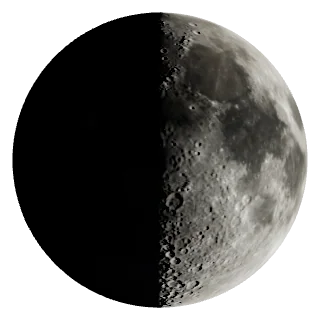
First Quarter
A clear half-light dividing the night
The moon is 90 degrees from the sun, illuminating exactly half its face. The right half is bright and the left half is dark, forming a D-shape.
ObservationObservable in the southern sky from afternoon until midnight. Highest at sunset.
CultureFalls around the 7th-8th day of the lunar month. The terminator line reveals craters most clearly, making it ideal for telescope observation.
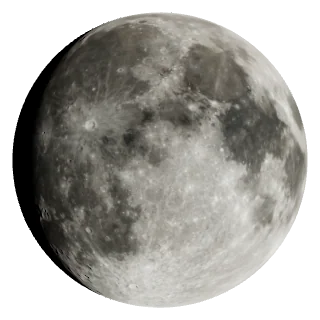
Waxing Gibbous
Moonlight widening slowly toward fullness
More than three-quarters of the moon is illuminated, approaching full moon. Only a slight shadow remains on the left edge.
ObservationRises in late afternoon and illuminates the sky until dawn.
CultureAround the 11th-12th lunar day, anticipation builds before the full moon. The moonlight is bright enough for outdoor activities.
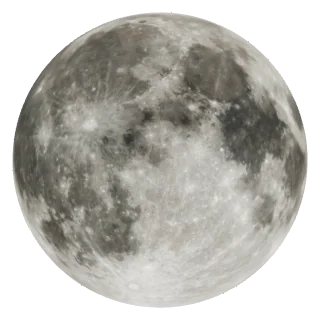
Full Moon
A round light filling the long hours of night
The moon is directly opposite the sun, with its entire illuminated face turned toward Earth. This is the brightest lunar phase.
ObservationRises in the east at sunset and crosses the sky throughout the night, setting in the west at dawn.
CultureFalls on the 15th day of the lunar month — the day of Chuseok and the Lunar New Year's first full moon festival. Symbolizes abundance and completion.
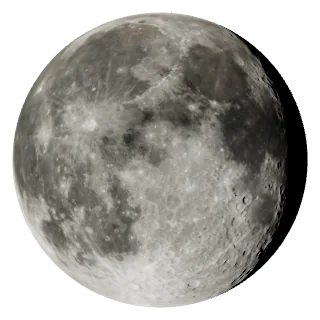
Waning Gibbous
A slightly diminished light rising late
After the full moon, the left side gradually darkens. Shadows begin to appear on the right edge, though more than three-quarters remains bright.
ObservationRises late at night and is visible until morning. Best for dawn observation.
CultureAround the 18th-19th lunar day, a time to savor the afterglow of the full moon. Ancient poets wrote of impermanence while gazing at the waning moon.
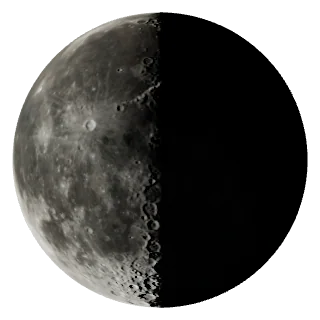
Last Quarter
A half-moon left in the morning sky
The moon is 270 degrees from the sun, illuminating exactly half — the opposite of the first quarter. The left half is bright and the right half is dark.
ObservationRises after midnight and is visible in the morning sky. Observable in the early morning hours.
CultureFalls around the 22nd-23rd lunar day. Only visible at dawn, it's sometimes called the 'dawn moon.'
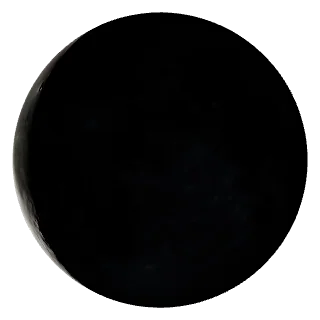
Waning Crescent
A final silver arc before daybreak
As the moon approaches the sun again, a thin crescent appears on the left side. It's preparing to disappear into the new moon phase.
ObservationVisible briefly in the eastern sky just before sunrise at dawn.
CultureAround the 27th-28th lunar day. The word 'Geumuem' in Korean comes from 'to hide,' as the moon hides itself during this phase.